



AC Making a Loud Noise? What Each Sound Means
AC making a loud noise? Rattling, buzzing, screeching, and hissing each point to a different problem. Match the sound to the cause and know when to call a pro.
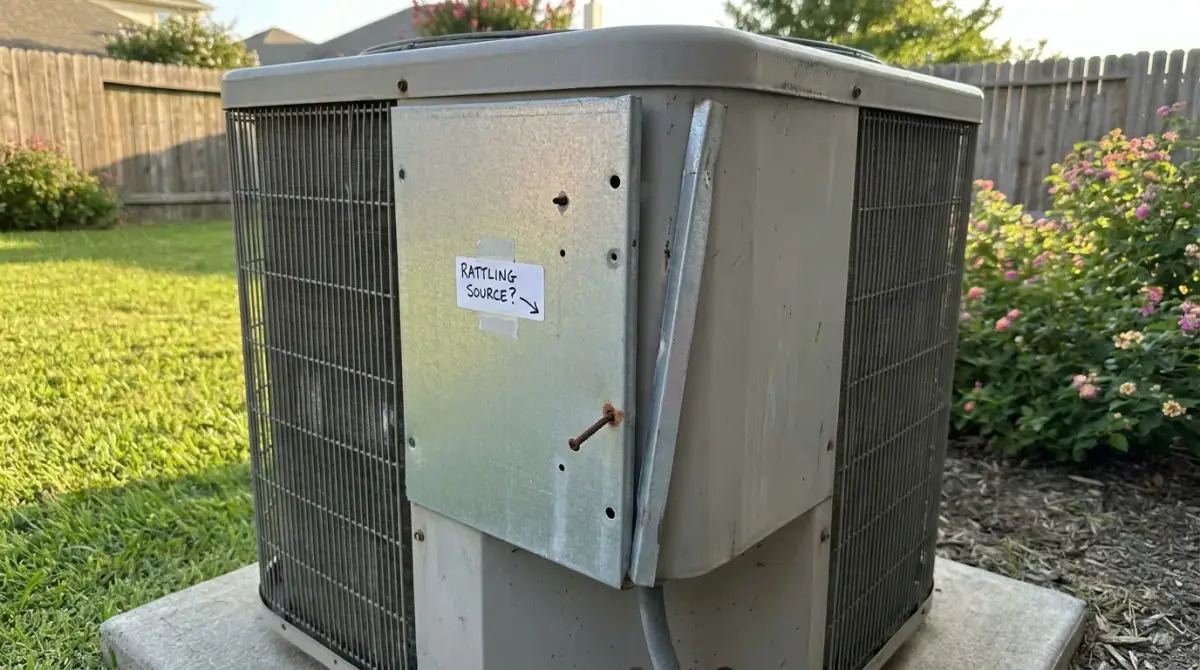
An AC making a loud noise usually signals a mechanical, electrical, or refrigerant problem inside the indoor or outdoor unit. The type of sound narrows the cause. Love Home Services handles emergency AC repair in Rancho Cucamonga and the Inland Empire, and identifying the sound before calling saves time on the diagnostic.
You’re in the backyard on a 100-degree Inland Empire afternoon and the condenser kicks on with a grinding screech that wasn’t there last week. Or the indoor unit starts a rhythmic banging at 2 a.m. that vibrates through the hallway. Rattling, buzzing, screeching, and hissing each trace to a different component, and the match determines whether you tighten a screw or call a technician.
Rattling and Banging
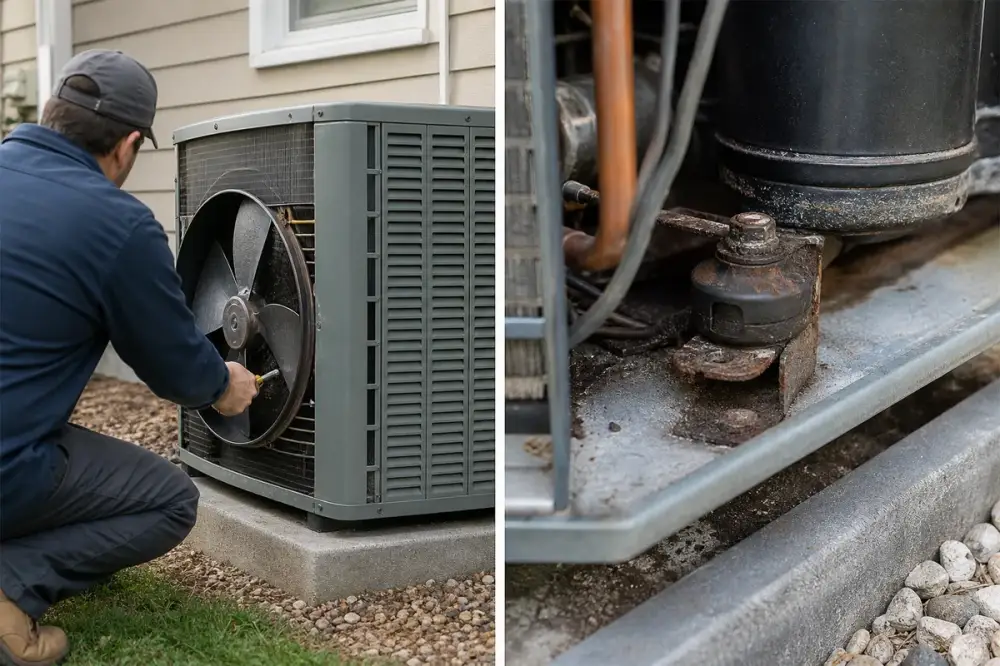
A rattling sound from the outdoor unit usually means a panel screw has loosened, a mounting bolt has come free, or debris like a twig or pebble has fallen into the condenser housing. Tighten visible screws and clear any debris from around the fan. A banging noise is more serious: it often points to a loose or broken connecting rod, crankshaft, or piston inside the compressor. If the banging is coming from the indoor unit, a blower wheel may be out of balance or cracked. Banging that gets louder over days means the loose part is causing additional damage with every cycle.
Buzzing and Humming
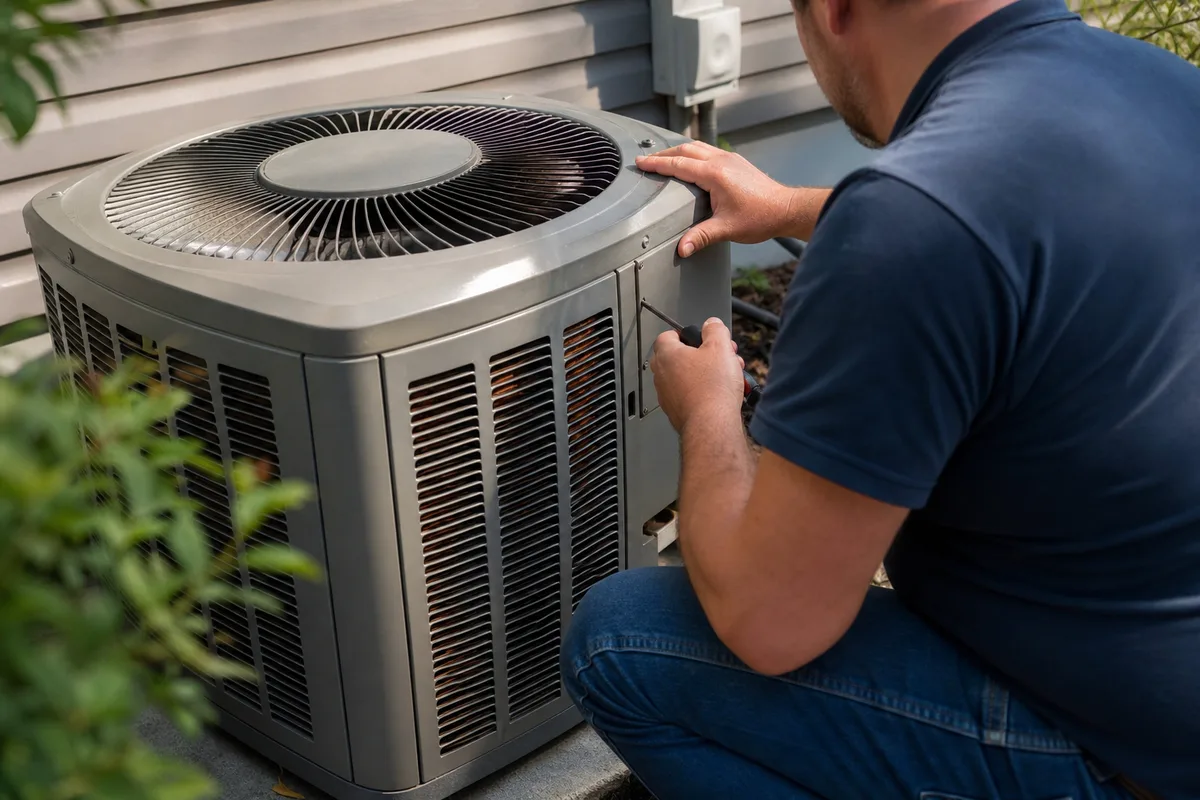
A steady buzz from the outdoor unit often comes from a failing contactor relay, which is the electrical switch that sends power to the compressor and fan. A humming sound without the fan spinning typically points to a bad run capacitor. The capacitor provides the initial jolt to start the motor, and when it weakens the motor hums but can't turn over. Electrical components inside the condenser store charge even when the system is off, so leave these to a licensed technician.
Screeching and Squealing
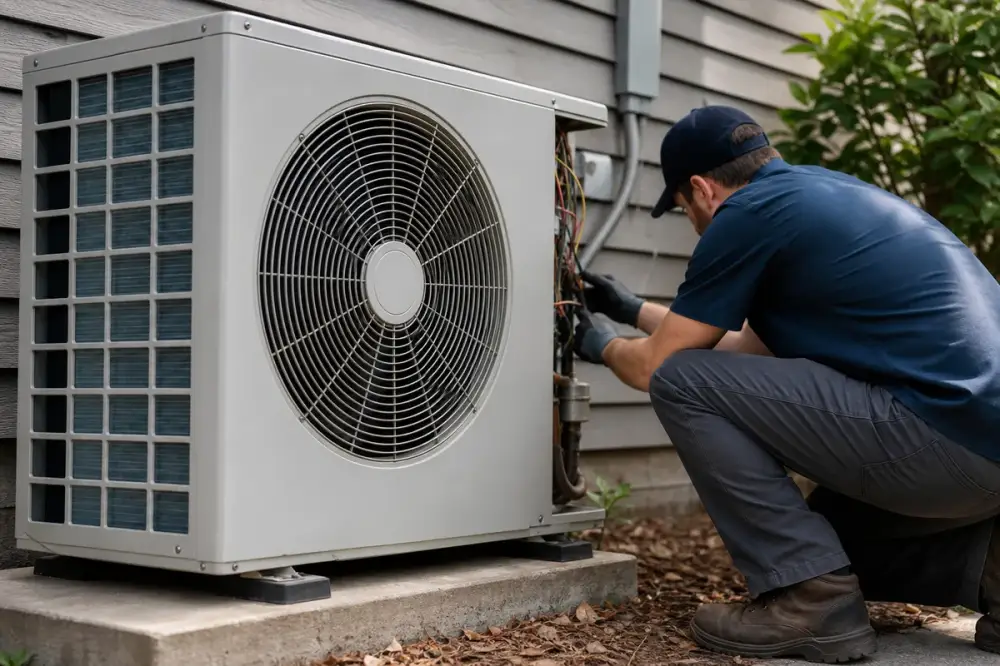
A high-pitched screech from the indoor unit typically means the blower motor bearings are worn or the fan belt is slipping. Older systems with belt-driven blowers develop this sound as the belt stretches and loses tension. Newer direct-drive motors screech when the bearings begin to fail. A screech from the outdoor condenser may indicate the fan motor bearings are seizing. In either case, running the system with failing bearings accelerates the damage and risks a complete AC shutdown that won't restart until the motor is replaced.
Hissing and Bubbling
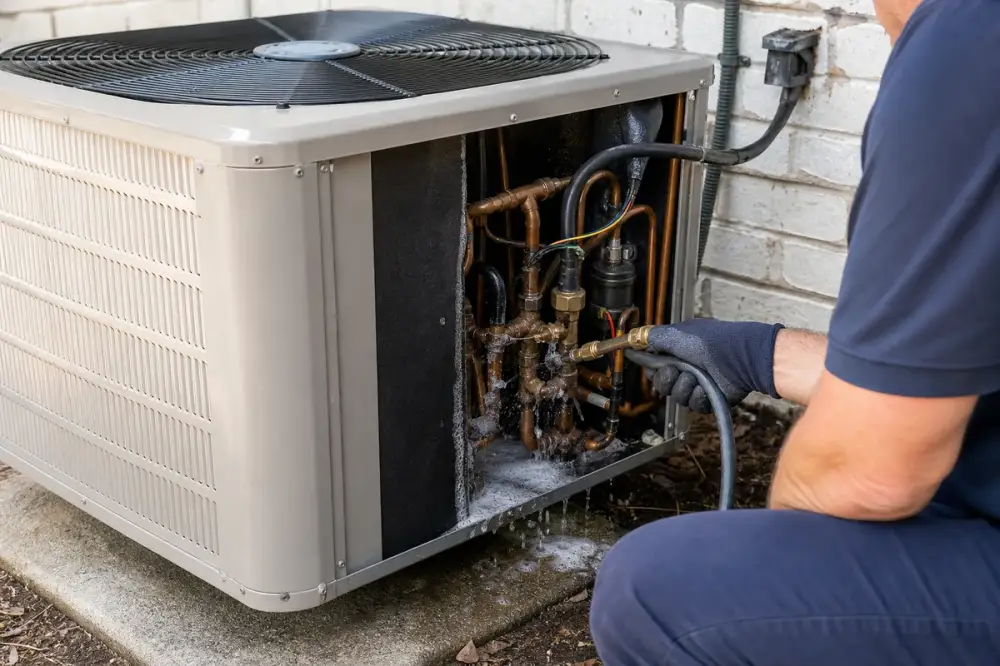
A hissing sound near the refrigerant lines or indoor coil usually means refrigerant is escaping through a crack or pinhole in the copper tubing. A bubbling or gurgling noise often accompanies a refrigerant leak when air enters the line where refrigerant is exiting. Both sounds mean the system is losing charge, and cooling performance will degrade within days. A technician who handles AC refrigerant repair in Claremont can pressure-test the lines and seal the leak before recharging the system.
Frequently Asked Questions
Is it safe to run my AC if it's making a loud noise?
Running an AC that's making a loud noise is safe only if the sound is a minor rattle from a loose panel or debris. Screeching, banging, and hissing all indicate internal damage that worsens with every operating cycle. Shutting the system off and calling a technician prevents a small repair from turning into a compressor replacement.
Why does my AC make noise only at startup?
An AC that makes noise only at startup usually has a weakening capacitor or a compressor with worn internal components that struggle under the initial load. The sound disappears once the motor reaches full speed because the mechanical resistance drops. This pattern is a warning sign that the part will eventually fail to start entirely.
Can a loud AC be fixed, or does it need to be replaced?
Most loud AC noises can be fixed without replacing the entire system. Love Home Services resolves the majority of noise complaints by replacing a capacitor, contactor, fan motor, or blower wheel. Full replacement only makes sense when the compressor itself is the noise source and the unit is older than 15 years.
What That Sound Is Telling You
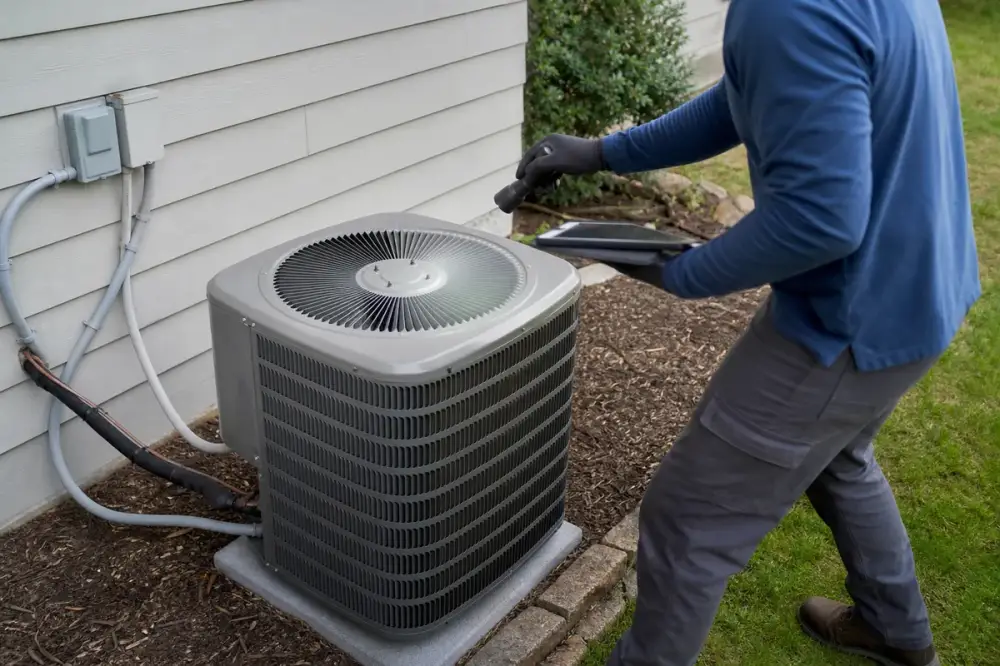
Every AC noise maps to a specific component and urgency level. Rattling is usually the least urgent and often fixable without tools. Buzzing and screeching mean an electrical or motor component is failing. Hissing means refrigerant is escaping. Matching the sound to the cause before calling a technician speeds up the repair and avoids unnecessary diagnostic time.
Call Love Home Services at (909) 762-8158 or schedule an AC noise diagnosis online to identify and fix the problem.