



AC Not Turning On? Troubleshooting Steps Before You Call a Pro
AC won't turn on? Check the thermostat, breaker, and float switch before calling a pro. Four checkpoints separate a quick reset from a repair call.
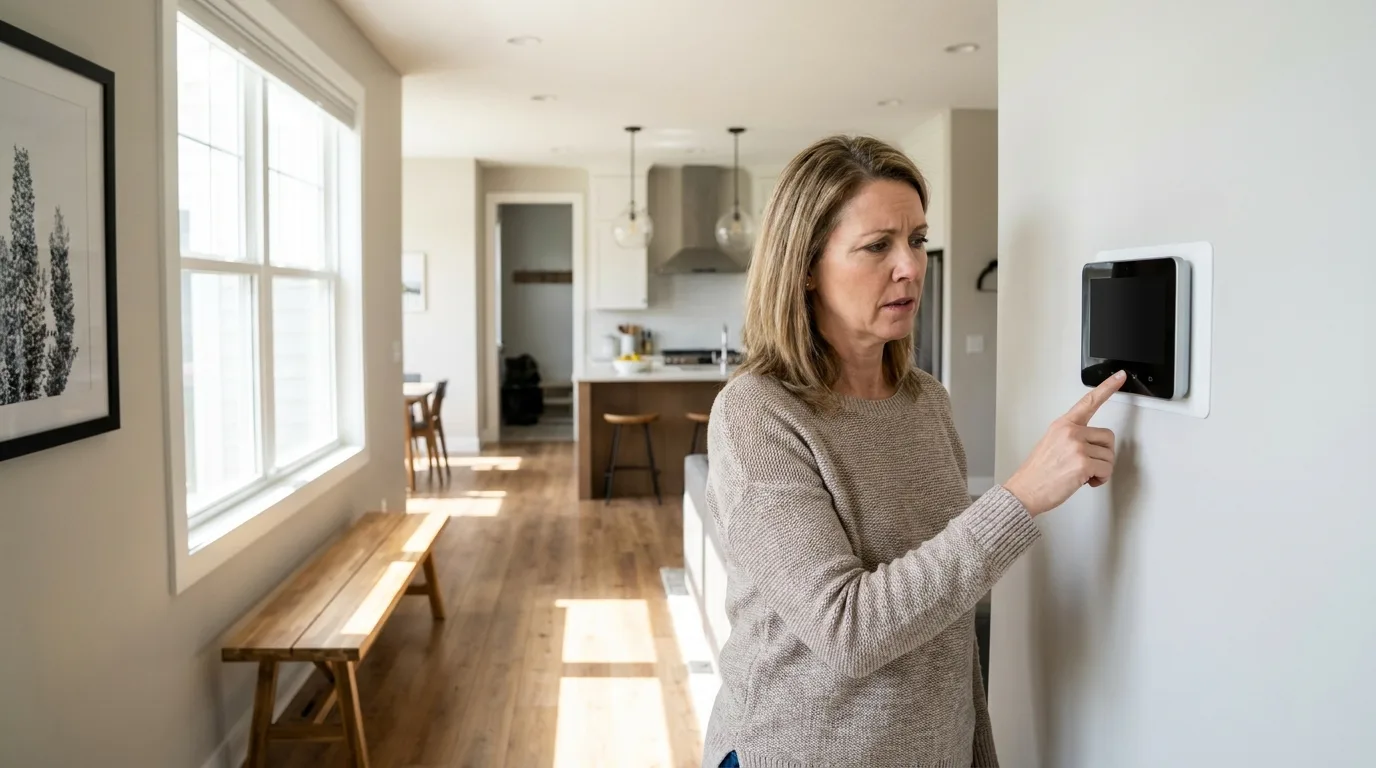
An AC not turning on is often caused by a tripped breaker, a thermostat error, or a safety switch shutoff rather than a major component failure. Love Home Services runs same-day AC diagnostics across Rancho Cucamonga and the Inland Empire, and roughly half the no-start calls turn out to be a quick reset rather than a mechanical failure.
Most homeowners assume a silent AC means the compressor died or the system needs replacing. In reality, three out of four no-start calls trace back to a power interruption, not a mechanical failure. Thermostat, breaker, float switch, capacitor: four checkpoints separate a five-minute reset from a service call.
Check the Thermostat First
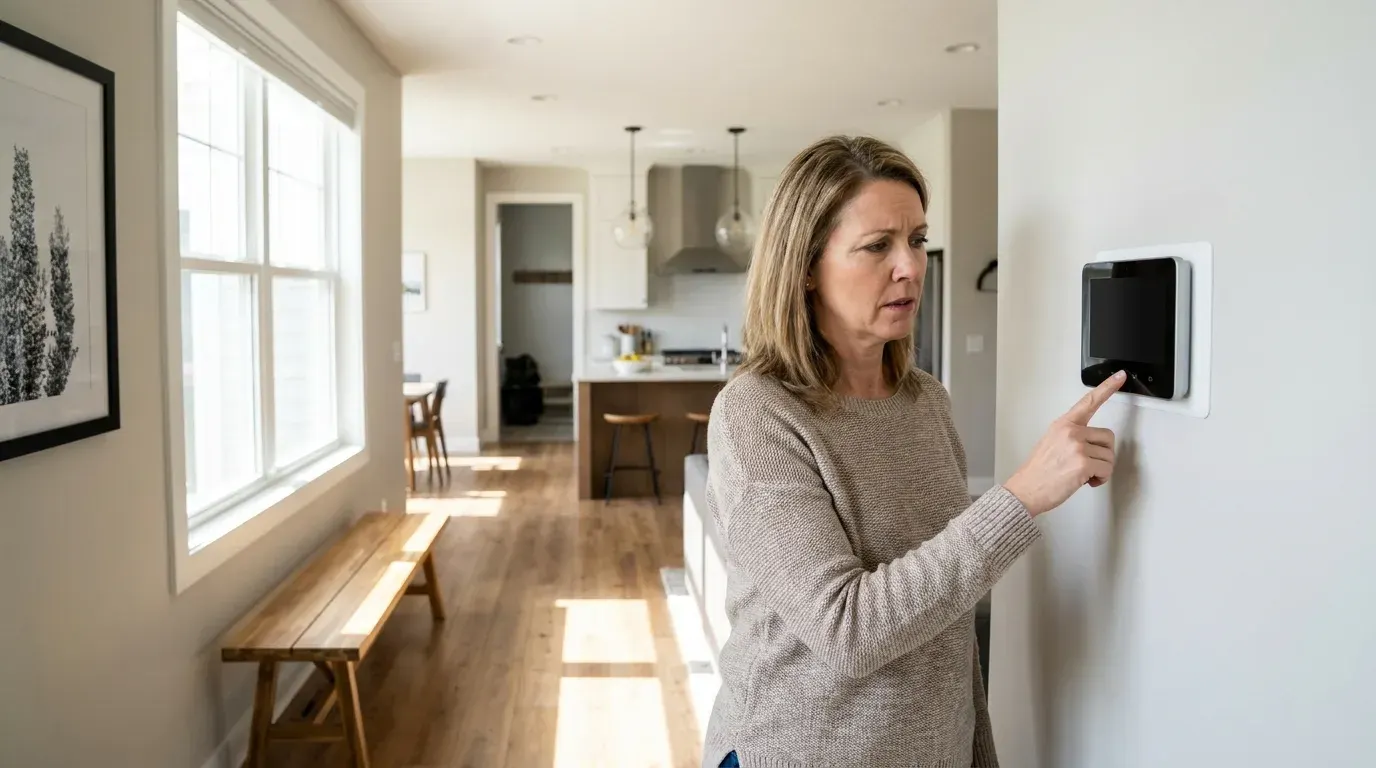
A thermostat that lost power, got bumped to "off," or switched to "heat" mode can make it look like the whole system failed. Confirm the display is on and the mode is set to "cool" with the fan on "auto." Set the target temperature at least three degrees below room temperature, then wait two to three minutes for the system to respond. If the screen is blank, check the thermostat batteries or the breaker that powers it. Programmable and smart thermostats occasionally lock up after a power surge, so a full reset at the thermostat's circuit breaker can restore normal function.
Inspect the Circuit Breaker and Disconnect
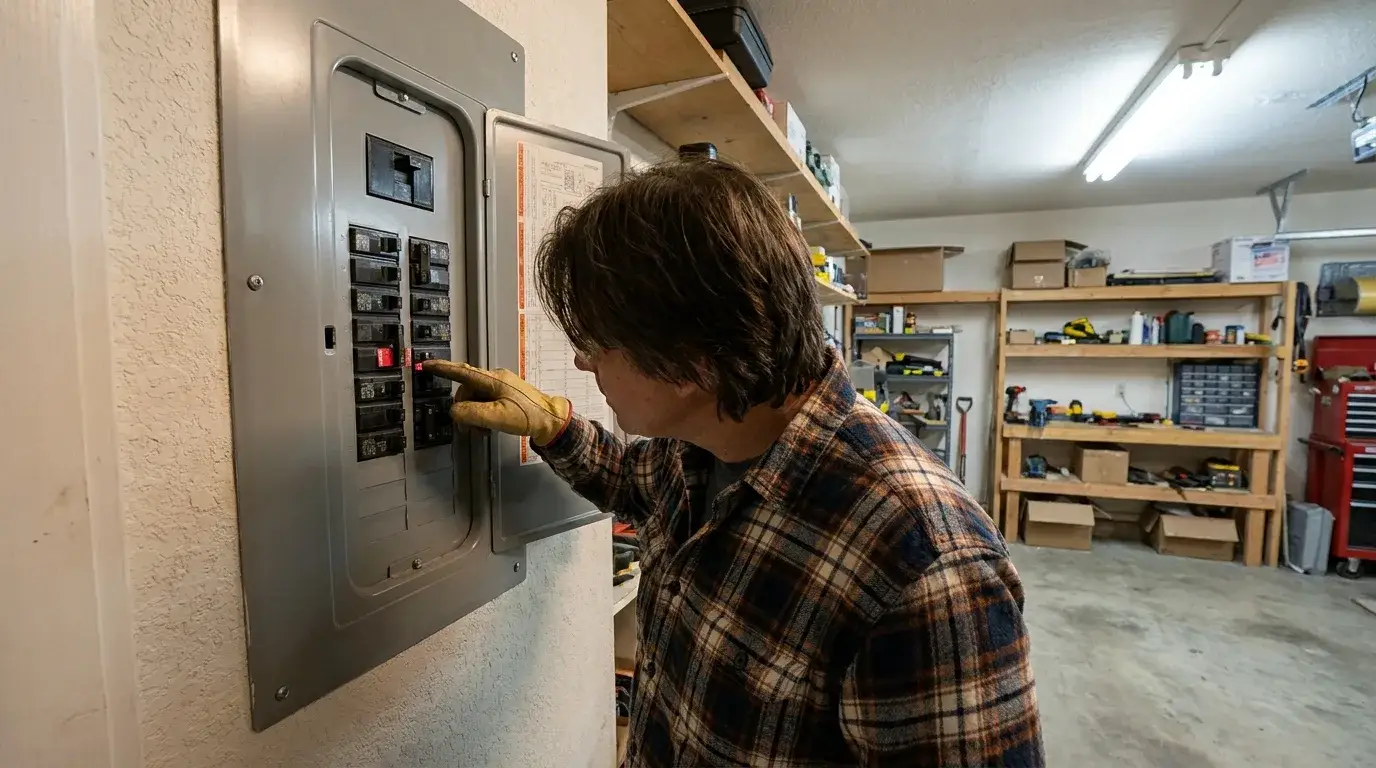
Most AC systems run on two breakers: one for the indoor air handler and one for the outdoor condenser. A tripped breaker sits in a middle position between "on" and "off." Flip it fully off, wait 30 seconds, then flip it back on. Also check the outdoor disconnect box near the condenser, which contains a pull-out fuse block that sometimes loosens from vibration. If the breaker trips again immediately, stop and call a professional, because a repeated trip signals a short or ground fault.
Look for a Tripped Float Switch
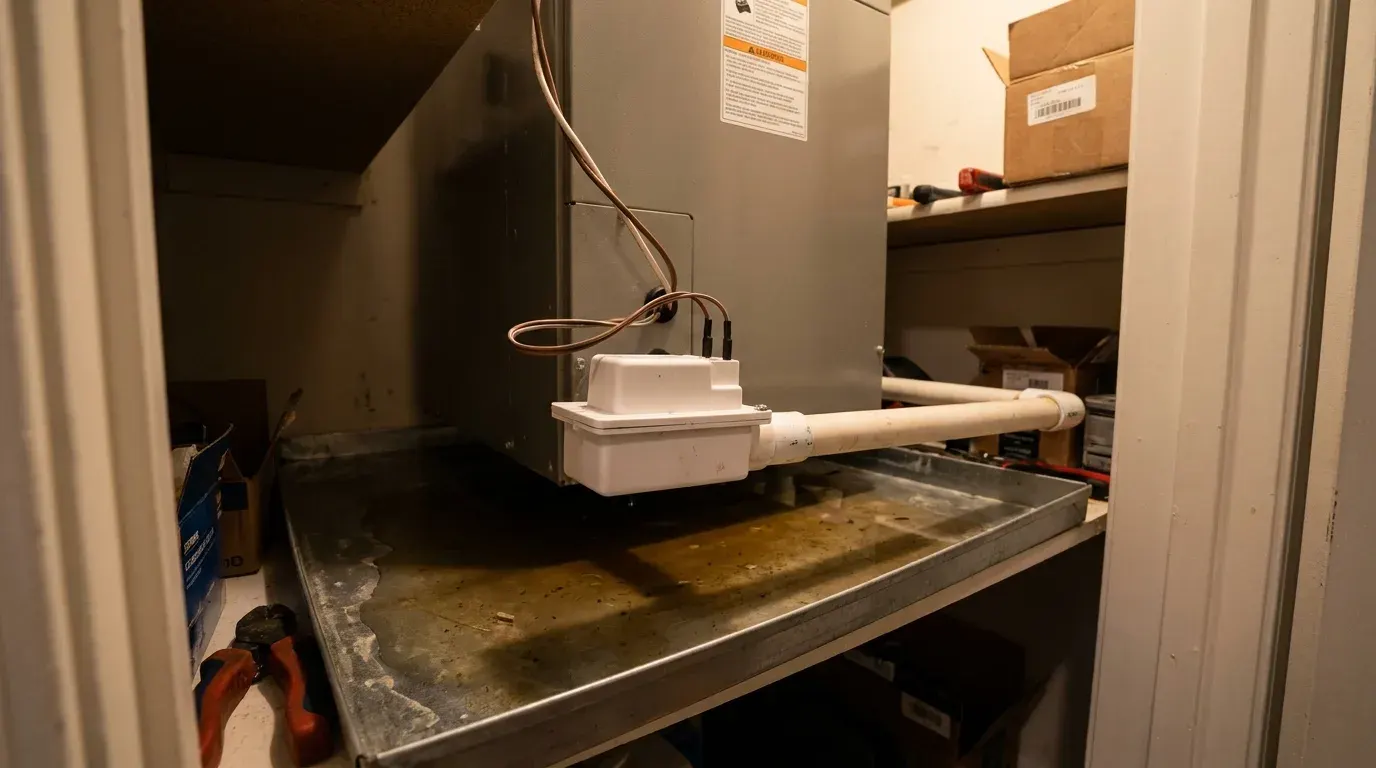
Many AC systems include a condensate overflow float switch that shuts the unit off when the drain pan fills with water. The switch prevents water damage, but it also stops the AC from running until the drainage issue is cleared. Check the drain pan under the indoor air handler. If there's standing water, clear the condensate line with vinegar or a wet-dry vacuum. Once the water drains and the float drops, the system should restart on its own.
When the Problem Is the Capacitor or Compressor
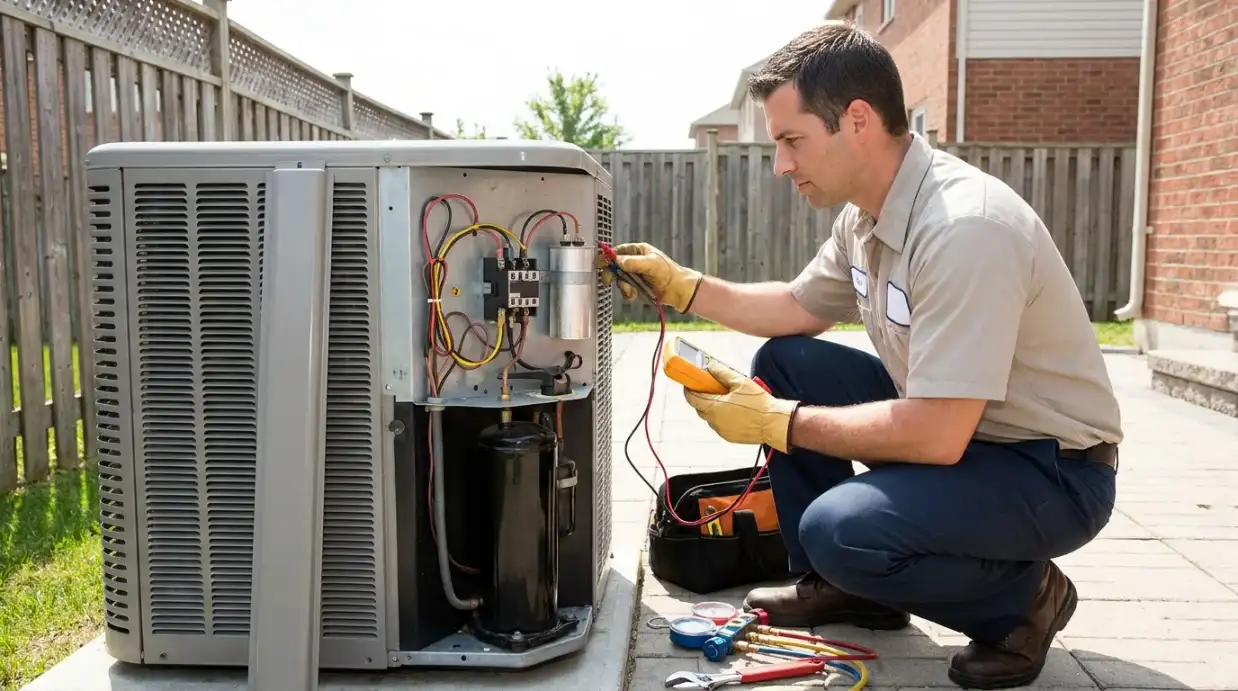
If the thermostat, breakers, and float switch all check out and the outdoor unit still won't start, the issue likely involves the run capacitor or the compressor itself. A failing capacitor often causes a humming noise from the condenser without the fan spinning. Capacitors store high-voltage charge even when the system is off, so this is not a safe DIY repair. A technician who handles AC compressor repair in Glendora can test the capacitor and compressor amperage to confirm the failure and recommend the right fix.
When a compressor fails on a system past the 10-year mark, the repair bill can approach the cost of a new AC unit. At that point, replacement often delivers better long-term value than repairing an aging system.
Frequently Asked Questions
Can a power surge prevent my AC from turning on?
A power surge can prevent an AC from turning on by tripping the circuit breaker, blowing a fuse in the outdoor disconnect, or locking up the thermostat's control board. Resetting the breaker and restarting the thermostat resolves most surge-related shutdowns. If the system still won't start, the surge may have damaged the capacitor or contactor.
Why does my AC breaker keep tripping?
An AC breaker that trips repeatedly usually points to a short circuit in the wiring, a failing compressor drawing too much current, or a ground fault in the condenser. This is not a problem to solve by resetting the breaker over and over. Love Home Services recommends calling a licensed electrician or HVAC technician after the second trip to prevent electrical damage or a fire risk.
Should I replace my AC if it won't turn on?
An AC that won't turn on does not automatically need replacement. Most no-start issues trace to the thermostat, breaker, float switch, or capacitor, all of which cost far less to fix than a new system. Replacement makes sense when the accumulated repair bills on a system over 15 years old approach the price of a new installation.
When Troubleshooting Isn't Enough
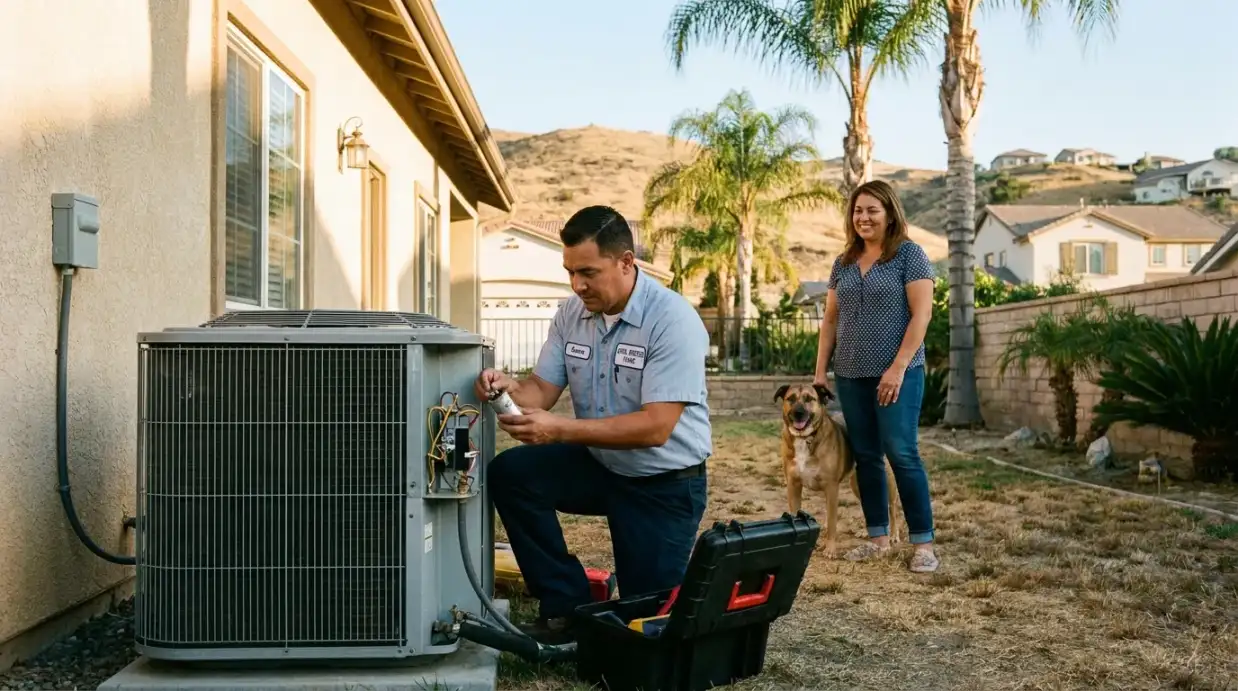
Work through the thermostat, breaker, and float switch before scheduling a service call. Those three checks take less than 10 minutes and solve the majority of no-start situations. When the problem sits inside the electrical panel of the outdoor unit, a licensed technician with the right tools and training is the safest path to a reliable fix.
Call Love Home Services at (909) 762-8158 or book a same-day diagnostic online to get your AC running again.