



Indoor Air Quality Tips for La Verne, CA Homeowners
Is the air inside your La Verne home making your family sick? Learn how HVAC systems affect indoor air quality and what practical steps make the biggest difference. Love Home Servi
Service Areas
Related Services
Most people think of air quality as an outdoor concern — smog, wildfire smoke, traffic pollution. But the EPA estimates that indoor air can be 2 to 5 times more polluted than outdoor air in the same area, particularly in homes with older HVAC systems, poor filtration, or limited ventilation. For
Indoor Air Quality La Verne
homeowners, where summer heat keeps windows closed for months and HVAC systems run nearly continuously, indoor air quality is worth taking seriously.
How Your HVAC System Affects Indoor Air Quality
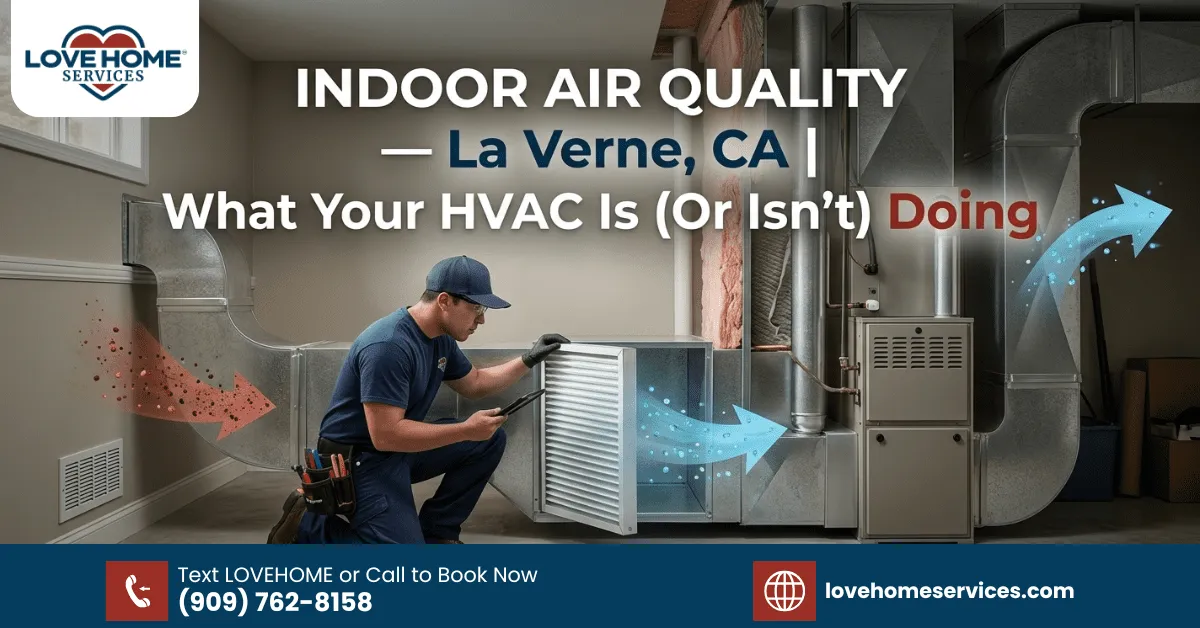
Your HVAC system does more than heat and cool your home. It circulates air throughout the entire living space, which means it also circulates whatever is in that air — dust, pollen, pet dander, mold spores, bacteria, and volatile organic compounds from furniture, paints, and cleaning products. The quality of your filtration, the cleanliness of your ductwork, and the condition of your air handler all directly affect what your family breathes.
The Single Most Impactful Step: Change Your Filter
This sounds basic because it is basic — and because it works. A clogged air filter does two things that both hurt air quality: it restricts airflow, which reduces the system’s ability to remove particles from the air, and it allows accumulated contaminants to be pushed back into the airstream as the filter saturates.
In La Verne, where summer wildfire smoke from nearby mountain areas can spike particle counts, filter quality matters more than most homeowners realize.
Filter recommendations by household type:
– Standard home with no pets, no allergy concerns: MERV 8, changed every 90 days
– Pets present: MERV 10–11, changed every 60 days
– Allergy or asthma in household: MERV 13, changed every 30–45 days
– Wildfire smoke season (June–October): consider MERV 13 or higher during active smoke events
Duct Cleaning | When It Helps and When It Doesn’t
Duct cleaning is one of the most commonly oversold
HVAC services
. Here is when it genuinely improves indoor air quality in La Verne homes:
– After a home renovation that generated significant dust (drywall work, sanding)
– After verified mold growth inside ductwork
– After a rodent infestation in the duct system
– In homes where ductwork has never been cleaned and is more than 15–20 years old
In most other cases, regular filter changes and proper system maintenance have more impact on indoor air quality than duct cleaning. If a company pressures you into duct cleaning with photos that look alarming, get a second opinion.
Humidity Control in La Verne
La Verne has a Mediterranean climate — dry summers with low humidity and slightly more moisture in winter. Very low indoor humidity during summer (below 30%) dries out mucous membranes, increases susceptibility to airborne viruses, and causes wood floors and furniture to crack. Very high humidity (above 60%) promotes mold growth.
Your HVAC system naturally dehumidifies during cooling by condensing moisture on the evaporator coil. If you notice high indoor humidity even when the AC is running, it may indicate a refrigerant issue, an oversized system that short-cycles before completing a full dehumidification cycle, or an undersized system working beyond its capacity.
UV Air Purifiers and Air Scrubbers
UV lights installed in the air handler kill mold, bacteria, and some viruses in the airstream before they are distributed through the home. They are particularly useful for households with immune-compromised members or persistent mold issues in the ductwork. At Love Home Services, we install and maintain UV air purification systems as an add-on to your existing
HVAC equipment in La Verne
homes.
Practical IAQ Checklist for La Verne Homeowners
– Change your air filter on the schedule appropriate for your household
– Schedule annual AC maintenance — a clean evaporator coil and drain line contribute to healthier air
– Keep bathroom and kitchen exhaust fans working properly — these remove moisture and cooking byproducts before they enter the HVAC system
– Test for carbon monoxide near your furnace, water heater, and attached garage — CO is odorless and produced by combustion appliances
– During wildfire smoke events, close windows and seal gaps around doors, and upgrade to a higher MERV filter temporarily
FAQ Schema Questions:
Q1: How does an HVAC system affect indoor air quality in La Verne?
A1: Your HVAC system circulates air throughout your home, which means it also distributes whatever is in that air — dust, pollen, mold spores, bacteria, and other particles. Filter quality, ductwork cleanliness, and coil condition all directly affect the air your family breathes.
Q2: What MERV filter rating should La Verne homeowners use?
A2: Standard homes without allergies or pets: MERV 8, changed every 90 days. Homes with pets: MERV 10–11, every 60 days. Households with allergies or asthma: MERV 13, every 30–45 days. During wildfire smoke events in La Verne, temporarily upgrading to MERV 13 or higher is recommended.
Q3: When does duct cleaning actually improve indoor air quality?
A3: Duct cleaning genuinely helps after home renovations that generated significant dust, after verified mold growth in ductwork, after rodent infestation, or in homes where ductwork is over 15–20 years old and has never been cleaned. In most other situations, regular filter changes and HVAC maintenance have a greater impact on air quality.