



Why Is My AC Leaking Water? Common Causes and Fixes
AC leaking water inside your home? Clogged drain lines, frozen coils, and cracked pans are common causes. Find out what to check and when to call for help.
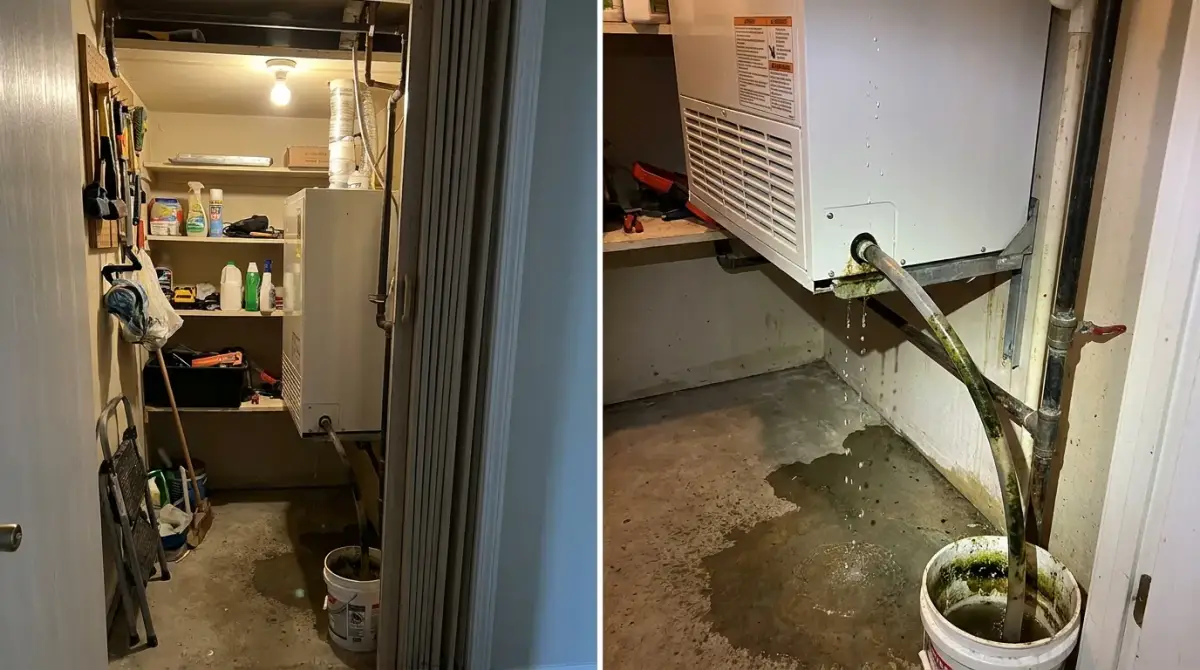
An AC leaking water inside your home usually means condensation isn't draining properly. A clogged drain line, a frozen evaporator coil, or a cracked drain pan accounts for most indoor leaks, and Love Home Services clears them through same-day AC repair in Rancho Cucamonga and across the Inland Empire before standing water reaches drywall and starts mold growth within 48 hours.
A homeowner in Upland called last summer after finding a growing puddle under the air handler every afternoon. The system cooled fine, so they assumed a pipe was leaking behind the wall. The real source was a condensate drain line packed with algae, something that takes 15 minutes to clear once you know where to look. One cause clears with vinegar, another with a fresh filter, and the third needs a technician to swap the drain pan.
Clogged Condensate Drain Line

Every AC unit produces condensation as it cools indoor air. That moisture collects in a drain pan and flows out through a PVC condensate line. When algae, dust, or debris clog the line, water backs up and overflows onto your floor or into the ceiling below. You can clear a minor clog by pouring a cup of distilled white vinegar into the drain access point near the indoor unit. If the clog doesn't clear, a wet-dry vacuum on the outdoor end of the line usually finishes the job. Adding a quarter cup of vinegar monthly prevents algae from rebuilding. In the Inland Empire, where months of heavy summer runtime keep condensation flowing nearly nonstop, drain lines clog most frequently between May and October.
Dirty Air Filter and Frozen Coil
A dirty air filter restricts airflow to the evaporator coil, which drops the coil temperature below freezing. Ice builds up on the coil surface and, when the system cycles off, melts faster than the drain pan can handle. The overflow leaks onto the floor or into the ceiling below. Replacing the filter is the first step. Knowing how often to replace your AC filter prevents this cycle from repeating. If ice keeps forming after a fresh filter, low refrigerant may be the deeper cause, and that requires a licensed technician to diagnose and repair.
Cracked or Rusted Drain Pan
The drain pan sits beneath the evaporator coil and catches condensation before it enters the drain line. On units older than 10 to 12 years, the metal pan can rust through or crack from repeated thermal cycling, letting water drip directly onto the floor or into the ceiling. A technician who handles AC repairs in Upland and the surrounding Inland Empire can replace the pan during a routine service visit. Installing a secondary overflow pan with a float switch adds protection by shutting the system off before water reaches the floor.
Frequently Asked Questions
Is it normal for an AC unit to leak a small amount of water?
A small amount of condensation near the outdoor unit is normal during humid conditions because the cooling process naturally produces moisture. Water pooling inside the home, however, always signals a drainage problem. Even a minor indoor leak can cause mold growth behind drywall within 48 hours if left unaddressed.
Can a refrigerant leak cause my AC to leak water?
Low refrigerant can indirectly cause water leaks by dropping evaporator coil pressure below the freezing point. Ice forms on the coil, and when the system cycles off the ice melts and overwhelms the drain pan. The water leak is a symptom of the refrigerant problem, not a plumbing issue, and the refrigerant leak must be sealed first.
How do I prevent my AC from leaking water?
Preventing AC water leaks requires keeping the condensate drain line clear and replacing the air filter on schedule. Love Home Services recommends pouring a quarter cup of vinegar into the drain access monthly and checking the filter every 30 to 60 days during Inland Empire summers. Annual professional maintenance catches drain pan corrosion and refrigerant loss before either one causes a leak.
Stop the Leak Before It Causes Damage
Most AC water leaks trace to a clogged drain line or a dirty filter, both of which a homeowner can address in under 30 minutes. A cracked drain pan or a frozen coil from low refrigerant needs professional attention. The longer water sits against drywall, subfloor, or ceiling material, the higher the risk of mold and structural damage that costs far more to fix than the original leak.
Call Love Home Services at (909) 762-8158 or schedule a leak inspection online to stop the leak and protect your home.