



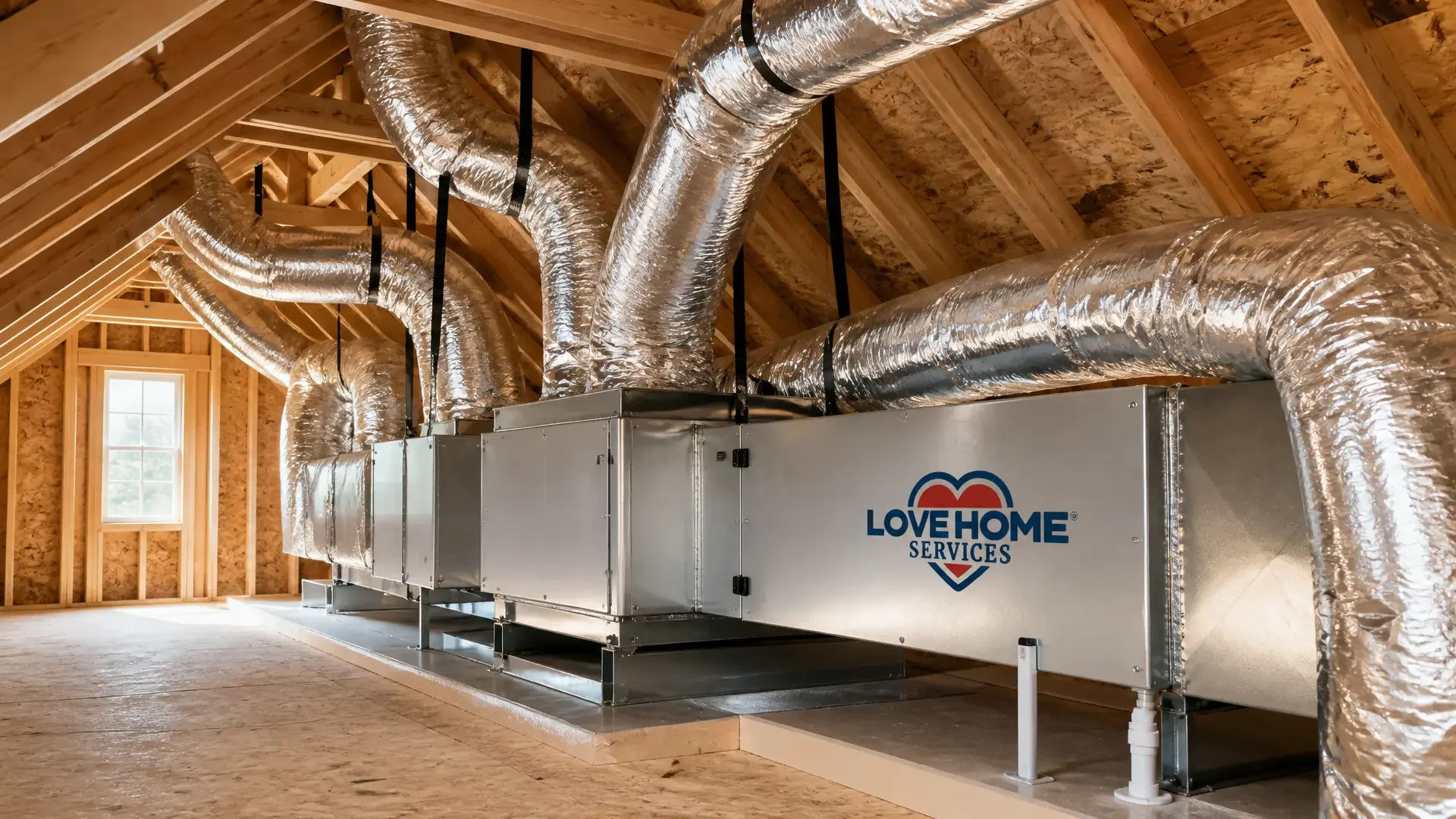
A system that runs fine but still leaves one room warm and another cold is one of the most common comfort complaints in Inland Empire homes. It's tempting to blame the ductwork right away, but weak airflow and uneven temperatures can come from more than one place in the system. Love Home Services provides HVAC evaluations and ductwork services, including sealing, repairs, and modifications, so the real question isn't which fix sounds the most thorough, it's which one actually matches what an inspection finds in your home.
Rancho Cucamonga is Love Home Services' primary service hub, with Fontana, Glendora, and other nearby communities also served. Duct condition still varies from house to house, so the guidance below is meant to help you ask better questions and understand your options, not to suggest every home needs the same fix.
Uneven Temperatures and Weak Airflow Have More Than One Cause
Uneven temperatures and weak airflow do not, by themselves, confirm that the ducts are the problem. A proper HVAC assessment also looks at air filters, the condition of the equipment itself, supply and return registers, system controls, and how air is actually being distributed through the house.
Skipping that broader check and moving straight to ductwork can mean paying for sealing or replacement that never touches the actual cause of the complaint, according to the Department of Energy's Building America Solution Center.
What a Proper Duct Inspection Actually Measures
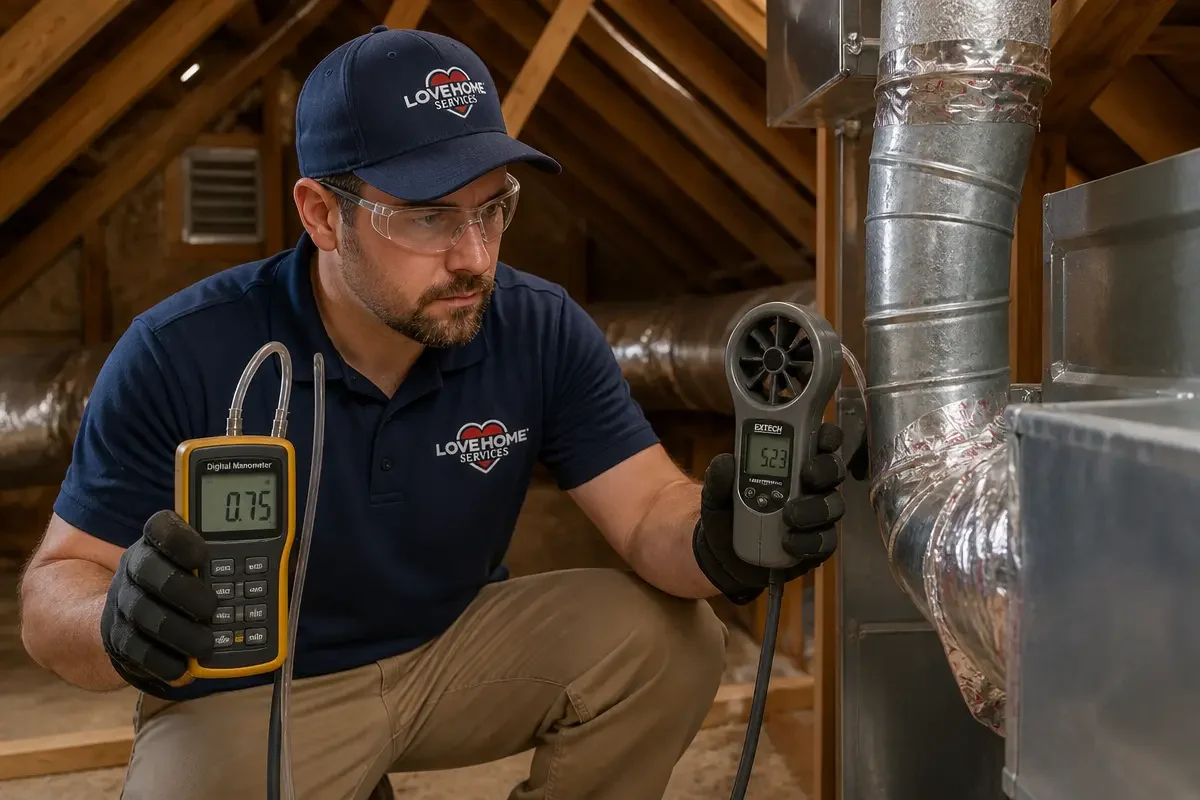
A duct pressurization test and an airflow assessment answer two different questions.
A duct pressurization test measures air leakage under specific test conditions. Depending on the testing method, it may quantify total duct leakage or leakage to the outdoors. A separate airflow assessment evaluates how much air is reaching different parts of the home and whether the distribution system is performing as intended.
A leakage number on its own doesn't prove that temperatures will even out, and balanced airflow in one area doesn't rule out meaningful leakage elsewhere in the system.
Independent guidance from ENERGY STAR recommends inspecting the whole duct system, checking the balance between supply and return air, and verifying airflow again once repairs are finished.
That is the kind of evidence that should support any sealing, repair, or replacement recommendation.
Matching the Fix to What's Actually Found

| Service | What It Addresses | When It Typically Fits |
|---|---|---|
| Duct Sealing | Air leaking through connections and seams in ducts that are otherwise sound | Leakage is a significant issue and the duct material and layout are still serviceable |
| Duct Repair | Specific damaged, crushed, disconnected, or poorly insulated sections | Physical damage is limited to certain sections and the rest of the system checks out |
| Duct Replacement | Ductwork that is extensively damaged, incorrectly sized, or no longer suited to the home's heating and cooling needs | Damage is widespread or an inspection shows the existing sizing can't properly support the system |
When sealing is the right call, professional approaches typically rely on mastic, appropriately rated metal tape, or aerosol-based sealants. Standard cloth duct tape isn't considered a durable substitute for approved sealing materials, since it may deteriorate and lose adhesion over time.
If your ducts run through an unconditioned attic or crawlspace, leakage and missing insulation are two separate issues. Sealing the connections reduces air leakage, but it doesn't add insulation where it's missing.
Not every Inland Empire home has ducts in this kind of space, so it's worth confirming where yours are actually located before assuming this applies to your system.
Comparing Estimates for the Same Scope of Work

Ductwork estimates can vary substantially depending on whether the project involves targeted sealing, repairs to individual sections, new or rerouted runs, or replacement of a larger portion of the system.
Access to the ductwork, how far the runs travel, the layout of the home, the material being replaced, and any insulation work all affect labor and scope. That is why two estimates for "duct replacement" can cover very different amounts of work.
When comparing proposals, it helps to ask the same questions of each contractor:
- Which sections are being replaced versus retained?
- Does the quote include insulation work, or only the ducts themselves?
- Is access work, such as opening walls, ceilings, or a crawlspace, included?
- Does the price include airflow or leakage testing once the work is finished?
These are good questions to bring to any inspection or estimate, since the answers tell you whether you're truly comparing the same project.
Love Home Services provides upfront estimates for its HVAC work. Ask for a written scope identifying the recommended ductwork corrections, the work included, and any additional testing or modifications before approving the project.
If You're Planning a New AC or Heat Pump Anyway
Replacing an air conditioner or heat pump is a practical time to have the existing ductwork evaluated, since a technician is already working on the connected system.
That said, an equipment upgrade doesn't automatically mean the ducts need to be replaced too. In many cases, the existing distribution system can be reused or adjusted to fit new equipment, and the inspection findings, not the age of the equipment, should guide that decision.
Love Home Services also handles HVAC and furnace installation and repair, so the same evaluation applies whether you're upgrading cooling, heating, or both.
If you're weighing a heat pump installation or considering AC installation, it's worth asking whether a duct evaluation should happen at the same time.
A Safety Step Worth Knowing About
For homes with gas- or oil-burning appliances, particularly naturally vented furnaces or water heaters, professional guidance recommends checking for backdrafting and conducting combustion safety testing after duct sealing work.
Duct leakage and changes to supply and return airflow can affect pressure relationships within a home. Under certain conditions, those pressure differences can interfere with the safe venting of combustion appliances.
That is why combustion safety testing is an important part of responsible duct-sealing work when applicable, rather than assuming the duct improvements have no effect on other equipment.
Find Out Which Fix Your Ducts Actually Need
The most reliable way to know whether your home needs duct sealing, repair, or replacement is a professional HVAC inspection, not a guess based on one warm room.
Love Home Services is a veteran-owned HVAC and plumbing company serving Rancho Cucamonga, Fontana, Glendora, and surrounding communities. Its team evaluates ductwork as part of HVAC assessments and installation projects and can discuss the appropriate scope for your home's airflow concerns.
Call (909) 762-8158 to schedule an HVAC assessment and find out whether sealing, targeted repairs, or more extensive ductwork changes are appropriate for your home.